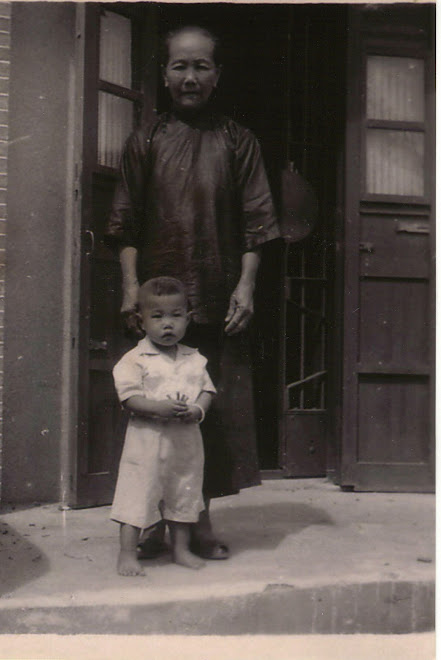
The media call me a baby boomer. Born in 1956, when I was growing up we were considered the trailing end of the post-war babies, born to parents who were vets.
I was an adult when I met someone 8 years younger than me who also considered herself a Baby Boomer. But for me, she missed the two key markers of that generation-- parents who were vets of World War 2, and personal memory of the death of JFK. Although we hadn't given the generation that followed us a name yet, I would have place her with them--Generation X.
But now I think that she and I really share more with each other than we do with either the Boomers or the Xers. A little too young for the hippies, a little too old for the Me Generation, those of us now in late middle age have to borrow our identities from the two most unpopular generations in modern times. The Boomers, with their reputation for self-centered entitlement, the Xers with their thoughtless consumerism. We look in both directions and try to distance ourselves from the blame.
After X they telescoped the generations, and gave the ones between the Xers and the Millennials a name- Gen Y, the generation without an identity.
My kids are solidly Millennial-- at once cynic and crusader, trying to delay adulthood because the world they've grown into isn't ready for them. Heading toward 30, they live like college students, in group homes lightly scented with pot and exotic cuisine; tomatoes growing on the roof, powering themselves by pedal because none of them has a job with a secure enough income to afford a car, or the gas to power it, or the faith that the world even cares.
I worry about them. The Boomers blew the promise, and the Xers their home equity, and there we were stuck in the middle, bearing the generation that had to watch the towers fall just as they became aware of the world.
Friday, August 3, 2012

Wednesday, July 4, 2012
Scandal
I'm listening to the news report of the Sandusky "scandal," on years long, systematic child abuse and cover up. Last week it was the Barclay's "scandal" on interest rate manipulation. The month before we had the latest in a string of JPMorgan "scandals."
I remember once there was a President who slept with his intern. This was a "crime" as in "high crimes and misdemeanors."
I don't think these words mean what the news media think they mean.
I remember once there was a President who slept with his intern. This was a "crime" as in "high crimes and misdemeanors."
I don't think these words mean what the news media think they mean.
Saturday, June 23, 2012
All grown up
My daughter, looking at the picture her father just took of her: "Oh my god, I look like a grown up."
Apparently 5 years of supporting herself (which she's done from barely a month out of high school) did not clue her into this.
Apparently 5 years of supporting herself (which she's done from barely a month out of high school) did not clue her into this.
Tuesday, May 15, 2012
Drain on society
My parents went to school on the GI Bill, a grateful nation subsidizing their college. My father went to Columbia University, free.
He spent the next 40 years teaching in public institutions, raising a family in the home that he bought.
My entire college education, all tuition, room and board, cost less than $1,000 a year in the 70s, subsidized by the taxpayers of Illinois. I spent the next 30 years working in nonprofit arts and social services, making not a profit, but the world a better place. And yes, raising a family in the home that we bought. I spent the first 10 of those years as a working artist, making paintings and drawings that were purchased by banks and bankers, hospitals and doctors.
My husband also got this taxpayer subsidized education, and has spent his career with children and religious institutions. And raising a family in the house that this subsidized education helped us to purchase. He continues to make music enjoyed by thousands, a lot of them bankers, and doctors, and businesspeople.
My son went to Conservatory on the sweat of our brows, enabled by our publicly-funded education, and federal Stafford and Perkins loans. He got one of those "useless" degrees, in Jazz Performance.
He now works for the public school system and in nonprofit arts. He continues to make music.
My daughter is working her way through college, opting to spend the first 2 years at a publicly-funded community college to save costs. She is also planning a career in the arts, but I'm betting it's going to have a lot to do with children, public institutions and gracing the lives of doctors, bankers and businesspeople.
My entire family has been motivated, throughout generations, not by the ideas of "profit" or "growth" but rather those of innovation, beauty, and community. We've worked hours as long as those of any banker, business owner (which by the way, is us), or doctor.
To the people of Illinois and the nation, I'd like to say thank you. We couldn't have done it without you, and are happy and grateful to have given it back.
For those who are now propounding that subsidizing education, higher education in particular, makes individuals and society lazy, forces bad choices (like choosing a community improvement motive over a personal profit motive) and inhibits that quintessential golden idol "growth," I would like to know: have you ever bought symphony tickets, or gone to the movies? Do you have art (either original or reproductions) hanging on the walls of your home or office? I'd like to know if your children take piano or dance lessons, and if you'd prefer that your day care provider or nanny has a high school diploma or even a college degree in early childhood ed. Do you wish you could find a Polish-speaking doctor for your elderly immigrant mother? Does your church have a band or a choir?
These are the things enabled by public education, which allows those with deep resources of faith, talent, and good will to get the education that the children of the bankers and doctors can pay for with cash and loans.
How again have we been a drain on society?
He spent the next 40 years teaching in public institutions, raising a family in the home that he bought.
My entire college education, all tuition, room and board, cost less than $1,000 a year in the 70s, subsidized by the taxpayers of Illinois. I spent the next 30 years working in nonprofit arts and social services, making not a profit, but the world a better place. And yes, raising a family in the home that we bought. I spent the first 10 of those years as a working artist, making paintings and drawings that were purchased by banks and bankers, hospitals and doctors.
My husband also got this taxpayer subsidized education, and has spent his career with children and religious institutions. And raising a family in the house that this subsidized education helped us to purchase. He continues to make music enjoyed by thousands, a lot of them bankers, and doctors, and businesspeople.
My son went to Conservatory on the sweat of our brows, enabled by our publicly-funded education, and federal Stafford and Perkins loans. He got one of those "useless" degrees, in Jazz Performance.
He now works for the public school system and in nonprofit arts. He continues to make music.
My daughter is working her way through college, opting to spend the first 2 years at a publicly-funded community college to save costs. She is also planning a career in the arts, but I'm betting it's going to have a lot to do with children, public institutions and gracing the lives of doctors, bankers and businesspeople.
My entire family has been motivated, throughout generations, not by the ideas of "profit" or "growth" but rather those of innovation, beauty, and community. We've worked hours as long as those of any banker, business owner (which by the way, is us), or doctor.
To the people of Illinois and the nation, I'd like to say thank you. We couldn't have done it without you, and are happy and grateful to have given it back.
For those who are now propounding that subsidizing education, higher education in particular, makes individuals and society lazy, forces bad choices (like choosing a community improvement motive over a personal profit motive) and inhibits that quintessential golden idol "growth," I would like to know: have you ever bought symphony tickets, or gone to the movies? Do you have art (either original or reproductions) hanging on the walls of your home or office? I'd like to know if your children take piano or dance lessons, and if you'd prefer that your day care provider or nanny has a high school diploma or even a college degree in early childhood ed. Do you wish you could find a Polish-speaking doctor for your elderly immigrant mother? Does your church have a band or a choir?
These are the things enabled by public education, which allows those with deep resources of faith, talent, and good will to get the education that the children of the bankers and doctors can pay for with cash and loans.
How again have we been a drain on society?
Saturday, April 14, 2012
Who are the rules for?
My kids are special. They are the smartest, funniest, most honest people I've ever met. They are better than your kids. I think that, while rules are important, my kids are so amazing that if they skirt the rules a little bit, that's okay, because they aren't like those other, ordinary people for whom the rules are made.
My students, too. They work hard and they or their parents make sacrifices so they can follow their muse. I should be able to bend the rules for them, especially when the rules don't make sense, or when they'd do better if they got to just ignore them.
And, frankly, while we're on the subject, there are a lot of rules that I'd be better off ignoring as well. Sometimes following rules is just so damned inconvenient; if I'm doing what needs to be done, then why should I have to dot every "i" and cross every "t." Plus I'm super smart, smarter than you in point of fact, so I should get a pass.
Why am I so pissy about this today? Because I follow the rules, sometimes at significant personal inconvenience or expense, and then I find out that somebody else is getting away with blowing them off. And frankly, I don't think I would get away with it, and I don't think I, or anyone, should be given the option to make the choice about which rules to follow.
You don't like the rules? Get them changed. Refuse to follow them and take the consequences. You shouldn't get to pick and choose which rules to follow, but still get the credential, or avoid the ticket, or receive the award.
It just pisses me off.
My students, too. They work hard and they or their parents make sacrifices so they can follow their muse. I should be able to bend the rules for them, especially when the rules don't make sense, or when they'd do better if they got to just ignore them.
And, frankly, while we're on the subject, there are a lot of rules that I'd be better off ignoring as well. Sometimes following rules is just so damned inconvenient; if I'm doing what needs to be done, then why should I have to dot every "i" and cross every "t." Plus I'm super smart, smarter than you in point of fact, so I should get a pass.
Why am I so pissy about this today? Because I follow the rules, sometimes at significant personal inconvenience or expense, and then I find out that somebody else is getting away with blowing them off. And frankly, I don't think I would get away with it, and I don't think I, or anyone, should be given the option to make the choice about which rules to follow.
You don't like the rules? Get them changed. Refuse to follow them and take the consequences. You shouldn't get to pick and choose which rules to follow, but still get the credential, or avoid the ticket, or receive the award.
It just pisses me off.
Sunday, April 8, 2012
Transitions.
My daughter stood at the boards of the local ice rink, where we skate together two days a week. We were NOT having a good practice. I can't turn anymore. She can't jump anymore.
"I think this part of my life may be over," she said, tearing up.
I don't know what to say.
"I think this part of my life may be over," she said, tearing up.
I don't know what to say.
Tuesday, April 3, 2012
Different lives
Your children live such different lives than you.
Generations ago this wasn't true. You lived the life your mother, and your grandmother, and probably your 5 times great grandmother lived. Change came slowly; your family situation was immutable to a large extent.
Enter the 20th Century and the dislocation of tens of millions (hundreds of millions?) from the agrarian past. Without the connection to the land and the community, there was really no reason to try to live the life your father lived, and your grandfather's and great grandfather's life was now out of reach. Those on the land continued, perhaps, to follow their ancient traditions and lifestyles, but those in the cities couldn't, wouldn't, or didn't need to. And the cities increasingly beckoned more and more people from the life on the farm, where the rhythms were becoming increasingly urban, or at least controlled by people whose rhythms were urban.
Suddenly there was this strange modern thing called "choice."
But your children's lives will also differ in more personal ways. My own family had broken down by the time I was my children's ages. My mother was dead, my father immersed in an increasingly remote role that had no room for me. Wei's mother remained (and remains) connected, but his elderly father died before my daughter was born.
My children retain strong bonds with us, and I can't see that changing. It was something deliberate on my part. I feel very keenly how adrift Wei and I were as young adults, without the strong anchor of a stable existing home or parents and wanted my kids to know that we were always there for them. I watch my children struggle with relationships, jobs, and, frankly poverty, and am completely nonplussed about how Wei and I handled this. We just had to make it up; the "adults" in our lives were, for the most part, absent, or useless.
My kids know that they can come home.
Generations ago this wasn't true. You lived the life your mother, and your grandmother, and probably your 5 times great grandmother lived. Change came slowly; your family situation was immutable to a large extent.
Enter the 20th Century and the dislocation of tens of millions (hundreds of millions?) from the agrarian past. Without the connection to the land and the community, there was really no reason to try to live the life your father lived, and your grandfather's and great grandfather's life was now out of reach. Those on the land continued, perhaps, to follow their ancient traditions and lifestyles, but those in the cities couldn't, wouldn't, or didn't need to. And the cities increasingly beckoned more and more people from the life on the farm, where the rhythms were becoming increasingly urban, or at least controlled by people whose rhythms were urban.
Suddenly there was this strange modern thing called "choice."
But your children's lives will also differ in more personal ways. My own family had broken down by the time I was my children's ages. My mother was dead, my father immersed in an increasingly remote role that had no room for me. Wei's mother remained (and remains) connected, but his elderly father died before my daughter was born.
My children retain strong bonds with us, and I can't see that changing. It was something deliberate on my part. I feel very keenly how adrift Wei and I were as young adults, without the strong anchor of a stable existing home or parents and wanted my kids to know that we were always there for them. I watch my children struggle with relationships, jobs, and, frankly poverty, and am completely nonplussed about how Wei and I handled this. We just had to make it up; the "adults" in our lives were, for the most part, absent, or useless.
My kids know that they can come home.
Subscribe to:
Posts (Atom)